U.S. Market Entry · September 22, 2026 · 5 min read
Why the Nostalgia Market Won't Scale Your U.S. Business
Selling to people who miss home is a fine way to land in the United States and a poor way to grow there. The scalable buyer is the American mainstream.

Cross-border CEO, operator and author
In brief
- 1The nostalgia market is a reasonable place to land in the United States, but it is too narrow and too exposed to one community's fortunes to carry a business.
- 2The Mexican companies that scaled in the U.S., such as Bimbo and Gruma, did it by selling everyday products to mainstream American households.
- 3Test a mainstream channel early, price against the category leader, and meet the compliance and standards a national buyer will ask for first.
Many Mexican and Latin American founders arrive in the United States with the same comfortable plan. Open in Los Angeles or Houston, sell to people who already know the brand, grow from there. It feels low-risk. The customers speak your language, miss your flavors and trust your name before you have spent a dollar on marketing.
It works, up to a point. The nostalgia market is real, and it is a sensible place to land. The trap is confusing the landing strip with the country.
The so-called nostalgia market is really a small niche. The real scalable market lies with the American consumer, the ordinary citizen, whether they are Hispanic or from anywhere else.
Do the arithmetic on the niche
Start with the community the plan depends on. Pew Research Center counts 68 million Hispanics in the United States in 2024, one in five residents, about 40 million of them of Mexican origin.1 That is a large and diverse population. The nostalgia buyer, though, the person who misses a particular brand from home, is above all an immigrant, and immigrants are a shrinking share of U.S. Hispanics: 40% in 2000, 33% in 2024. Over the same years the share who speak Spanish at home fell from 78% to 68%, and today two-thirds of Hispanics are U.S. citizens by birth.1
68M1
Hispanics in the U.S. in 2024, one in five residents
33%1
Share of U.S. Hispanics who are immigrants, down from 40% in 2000
68%1
Share who speak Spanish at home, down from 78% in 2000
Multiply those numbers and the core nostalgia customer is roughly one American resident in fifteen.1 Seven in ten U.S. Hispanics now speak English proficiently,1 and in my experience the second and third generations choose brands much the way their neighbors do. A plan built only for the first generation is a plan built for a share of the market that does not grow with the country.
What the companies that scaled actually did
Grupo Bimbo is the clearest case, and one of the cases I study in Destino USA. Look at what it bought.
- 1994
Buys La Hacienda, a California tortilla maker.2
- 1998
Buys Mrs Baird's bakery in Texas; the U.S. operation becomes Bimbo Bakeries USA.2
- 2002
Acquires George Weston's western U.S. business, with Oroweat, Entenmann's and Thomas'.2
- 2009
Adds Weston's remaining U.S. fresh bakery brands, including Arnold and Stroehmann.2
- 2011
Buys Sara Lee's North American fresh bakery business, roughly doubling its U.S. operation.2
- 2024
North America produces 46.4% of Grupo Bimbo's sales.3
The first step was a tortilla company. Everything after it was sandwich bread, English muffins and coffee cakes that ordinary American families already put in their carts. Bimbo used a culturally close product to learn the market, then scaled with mainstream brands.
Gruma, the Monterrey tortilla maker, tells the same story from another angle. Its U.S. subsidiary sold $3.45 billion in 2025, 54% of the group's net sales and 64% of its operating income.4 The tortilla has become an everyday American product, and Gruma's 2025 report credits its wellness line with holding up while U.S. consumer sentiment weakened.4 Even a Mexican mineral water made the jump: Topo Chico had started to grow beyond its core market in Texas when Coca-Cola paid Arca Continental $220 million for the brand in 2017.5
When one community carries the whole business
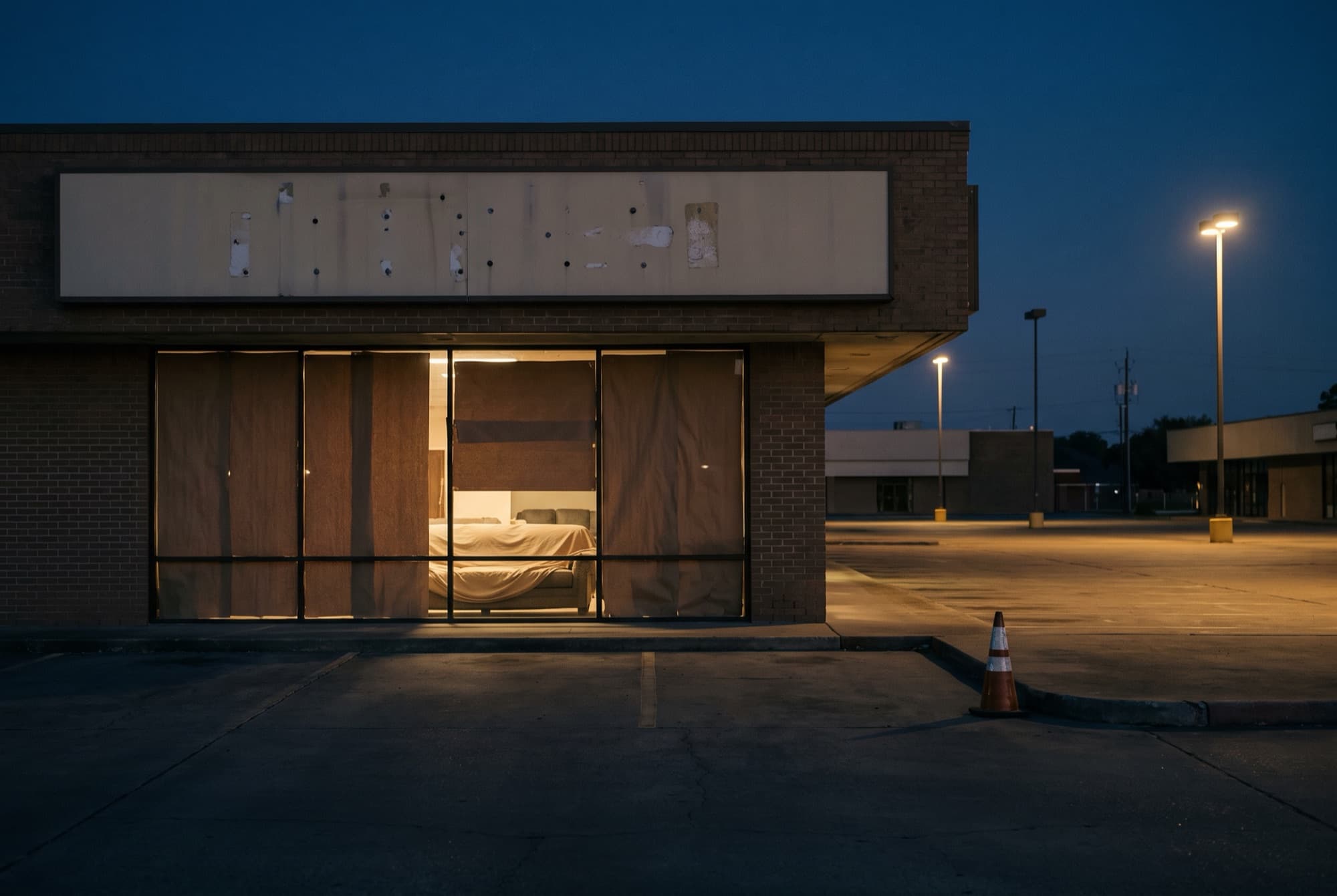
The niche has a second weakness: it ties your fortunes to the circumstances of one community. In 2017 Famsa, the Monterrey retailer, ran 26 U.S. furniture showrooms whose core customers were Hispanic families in Texas and Chicago. That year those customers pulled back. Its U.S. director said the rules of the game had changed for them; the company expected sales to fall 12% to 15%, closed five stores and rewrote its advertising to reach a broader niche.6
Grupo Chedraui shows both sides inside one company. Its U.S. arm ran El Super and Fiesta Mart, formats aimed at Hispanic shoppers,8 when it paid about $620 million in 2021 for Smart & Final, a mainstream grocery chain with more than 250 stores in California, Arizona and Nevada.7 In the last quarter of 2025, the Hispanic-oriented formats lost customers as stricter immigration policies and a federal shutdown that interrupted benefit payments hit their shoppers. Smart & Final's EBITDA rose 20.4% in the same quarter. The U.S. now produces more than half of Chedraui's sales.8
This is not a political argument. It is concentration risk, the same thing a CFO would flag if most of the revenue came from one client.
Of course cultural closeness matters in a product or service, but it is far from being the only thing, or even the most important one.
The mainstream plays by different rules
None of this means hiding where you come from. Origin can sell in the mainstream; authenticity is worth money. But the mainstream buyer, and the retailer who serves that buyer, judges you on other things first.
We are guided by compliance, meeting standards, quality, speed of execution, legal certainty and discipline.
The nostalgia plan
- Customer: someone who already knows the brand
- Shelf: the Hispanic aisle or a community store
- Message: the taste of home
- Growth: capped by one community's size and fortunes
- Proof: sales in Los Angeles and Houston
The mainstream plan
- Customer: any shopper with the need your product meets
- Shelf: the main aisle, next to the category leader
- Message: the benefit, with origin as a bonus
- Growth: capped by execution
- Proof: reorders from buyers who never heard of you at home
Test the mainstream before you need it
Five moves from niche to market
Split your U.S. revenue
Separate sales to customers who knew you at home from sales to customers who didn't. If you can't tell them apart, that is your first finding.
Describe the product without the flag
Say what it does for someone who has never been to your country. A tortilla is a wrap, a quick dinner, a lower-carb lunch. If the description falls apart, the product needs work.
Price against the main aisle
Compare your landed price with the category leader in a mainstream chain, not with other imports in the international aisle.
Prepare the paperwork before the pitch
National buyers ask about food-safety audits, insurance, labeling, fill rates and delivery windows before they ask about taste. Have the answers ready.
Run one mainstream test
Pick one region and one mainstream channel, set a reorder target and fund the test long enough to read the result honestly.
That number is the first thing we look at in a U.S. market entry review, and pricing against the leader is what the Pricing Power Audit™ measures. For the wider picture of why entry is closer to surgery than to sales, read entering the U.S. is a corporate transplant. The cases, Bimbo among them, are in Destino USA.
Enthusiasm is not enough. If you are thinking of taking your business to the American market, you are right to. Just be ready to leave the comfort of the customers who already love you.
Sources.
- 1Pew Research Center, Key facts about U.S. Latinos, October 22, 2025.
- 2Bimbo Bakeries USA, Our History.
- 3Food Business News, Grupo Bimbo tallies soft sales in North America for fiscal 2024, March 3, 2025.
- 4GRUMA, S.A.B. de C.V., Fourth Quarter 2025 Results, February 18, 2026.
- 5Food Dive, Coca-Cola acquires Mexico's Topo Chico sparkling water for $220M, October 3, 2017.
- 6Furniture Today, Hispanic consumer pullback leads FAMSA to close 5 stores, adjust marketing, August 23, 2017.
- 7The Shelby Report, Grupo Comercial Chedraui to acquire Smart & Final, May 14, 2021.
- 8Expansión, Chedraui cae 3% en ventas por menor consumo hispano en EU, February 24, 2026.
Keep reading
- Entering the U.S. Market Is a Corporate TransplantWhy a U.S. launch is closer to surgery than to a sales plan.
- U.S. Market EntryA readiness diagnostic, a market thesis and a gated 90-day entry.
- Destino USAReal cases, from Bimbo to FEMSA, of companies entering the American market.
- Pricing Power Audit™Find out whether your price holds next to the category leader.


Questions readers ask
The nostalgia market, or mercado de la nostalgia, is demand from immigrants for the brands, foods and products of their home country. For Mexican and Central American companies it is often the first door into the United States. It is real and loyal, but it is limited by the size of the immigrant community and shrinks in relative terms as later generations shop like their neighbors.
Working through this right now?
Tell Daniel where your company stands. He reads every message himself and replies personally.